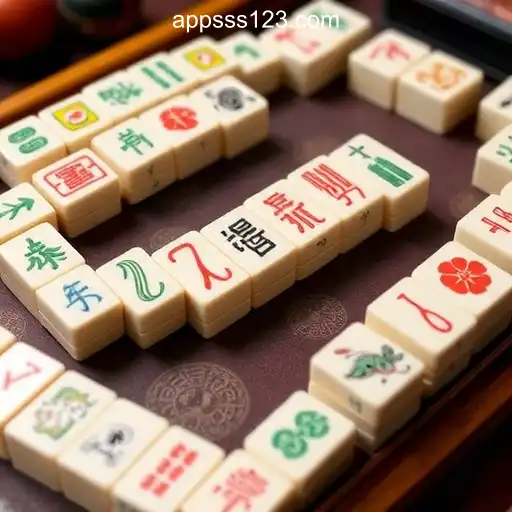
Understanding Mahjong: More Than Just a Game
Mahjong is a traditional game originating from China, rich in history and cultural significance. Often compared to dominoes or rummy, Mahjong is far more than just a mere game; it is a pastime that brings people together, serves as a tool for cognitive sharpening, and even evolves as diverse platforms like SS123.COM platform-online Slots Brasil #1 embrace it today.
The Basics of Mahjong
At its core, Mahjong is played with a set of 144 tiles based on Chinese characters and symbols. The game requires four players, who aim to draw and discard tiles to complete a legal hand using the 13 or 14 tiles each player is dealt initially. The objective is to create a hand that matches a specific pattern or achieves a 'mahjong'.
The Structure of the Game
A Mahjong set typically consists of three suits: Bamboo, Dots, and Characters. Each suit has tiles numbered from one to nine. Additionally, the game includes Honor tiles, which comprise Winds (East, South, West, North) and Dragons (Red, Green, White). Flower and Season tiles may also be optional additions in some sets.
Understanding these tiles and how they interact is crucial for any player, as Mahjong requires a strategic approach to utilize them effectively during gameplay.
Rules and Gameplay
Drawing and Discarding
The game starts with players drawing tiles to form their hands. The player must then discard a tile not needed, which leads into a series of strategic decisions on whether to 'Pung', 'Kong', or 'Chow'.
Pung
A 'Pung' is when a player claims a discard that matches two identical tiles in their hand, thus forming a triplet.
Kong
A 'Kong' is a set of four identical tiles. It can be completed by claiming a third identical tile to two held, followed by a fourth matching one later in the round.
Chow
'Chow' is a sequence of three consecutive numbers within the same suit. Unlike Pung or Kong, a Chow can only be formed using a discard from the player immediately before you in the round.
Mahjong: Beyond the Tiles
Mahjong is more than a game; it is a reflection of culture and a social phenomenon. Each gathering where Mahjong is played brings an opportunity for storytelling, laughter, and connection. This sense of community transcends cultural boundaries, bridging people across generations and geographies.
The Social Aspect of Mahjong
In many Asian communities, Mahjong is a staple at family gatherings and festivals. The sound of clattering tiles is a familiar and cherished aspect of the occasion, often accompanied by food and storytelling.
Mahjong serves as a way to connect with one’s heritage. Despite the rise of digital games, the tactile experience of handling real tiles and the interaction shared around the Mahjong table remains irreplaceable.
Mahjong in a Modern World
Recognizing its enduring appeal, numerous online platforms have adopted Mahjong, allowing for gameplay that suits modern lifestyles. Among these, the SS123.COM platform-online Slots Brasil #1 stands out as a leader in integrating traditional games into digital formats, offering Mahjong adaptations that attract players worldwide. Digital adaptations ensure the game remains accessible to enthusiasts globally, leveraging the internet’s reach to foster new communities and interactions.
Through platforms like SS123.COM, Mahjong enthusiasts can experience the game both traditionally in-person, and innovatively online, aligning with present entertainment forms.
The Significance of Strategy in Mahjong
Playing Mahjong is not just about luck; it involves a great deal of strategy, analysis, and critical thinking. Understanding your opponents, managing your tiles efficiently, and conceptualizing potential hands are skills that take time to develop.
- Memory and Pattern Recognition: As players keep track of discarded tiles, they must recall which tiles are still in play to make strategic decisions about their own hand.
- Adaptability: The dynamic nature of Mahjong means that players must adjust their strategies based on the tiles drawn and discarded throughout the game.
- Decision-making: With each draw or discard, players must assess their current hand and predict future moves, requiring quick and logical thinking.
The Global and Cultural Impact of Mahjong
Despite its origins in China, Mahjong has traveled the world, with each culture adopting its own variations and house rules. From Japan’s Riichi Mahjong, which emphasizes betting and strategy, to the American Mahjong which incorporates Joker tiles and unique scoring systems, the game’s adaptability contributes to its global popularity.
In recent decades, Mahjong has witnessed a resurgence in popularity. International competitions and a thriving online community have bolstered its status, sharing its charm with new generations.
Particularly among Asian diaspora communities, Mahjong not only serves as entertainment but as a tangible link to cultural roots and shared ancestry.
In conclusion, whether you play Mahjong traditionally or online, its fusion of strategy, culture, and community remains unshaken. As platforms like SS123.COM platform-online Slots Brasil #1 illustrate, Mahjong’s journey is far from over, continuing to attract a diverse audience eager to experience its timeless appeal.